Small-group observation
Outings are divided into manageable groups so participants can hear calls, compare notes and move without creating a crowd around wildlife. Leaders set a pace suitable for the habitat and visibility.
Dedicated to rigorous field identification, quiet habitat observation, and community-powered bird stewardship across New Zealand.
Systematic recording aligned with national bioacoustics and regional census protocols.
Zero-disturbance field ethics: we yield every track, avoid playback, and protect nesting perimeters.
Welcoming curious beginners alongside seasoned field ornithologists across Aotearoa.
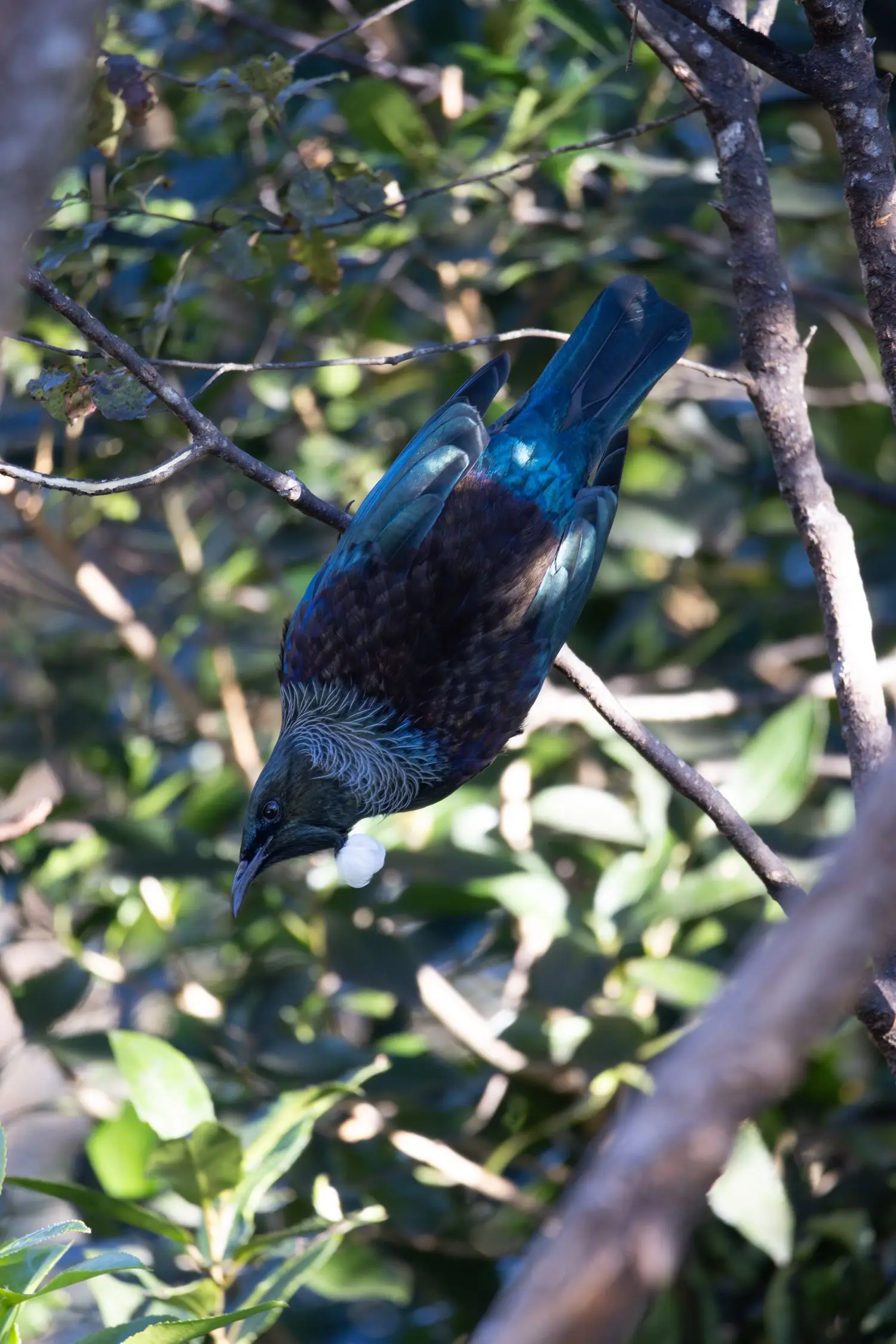
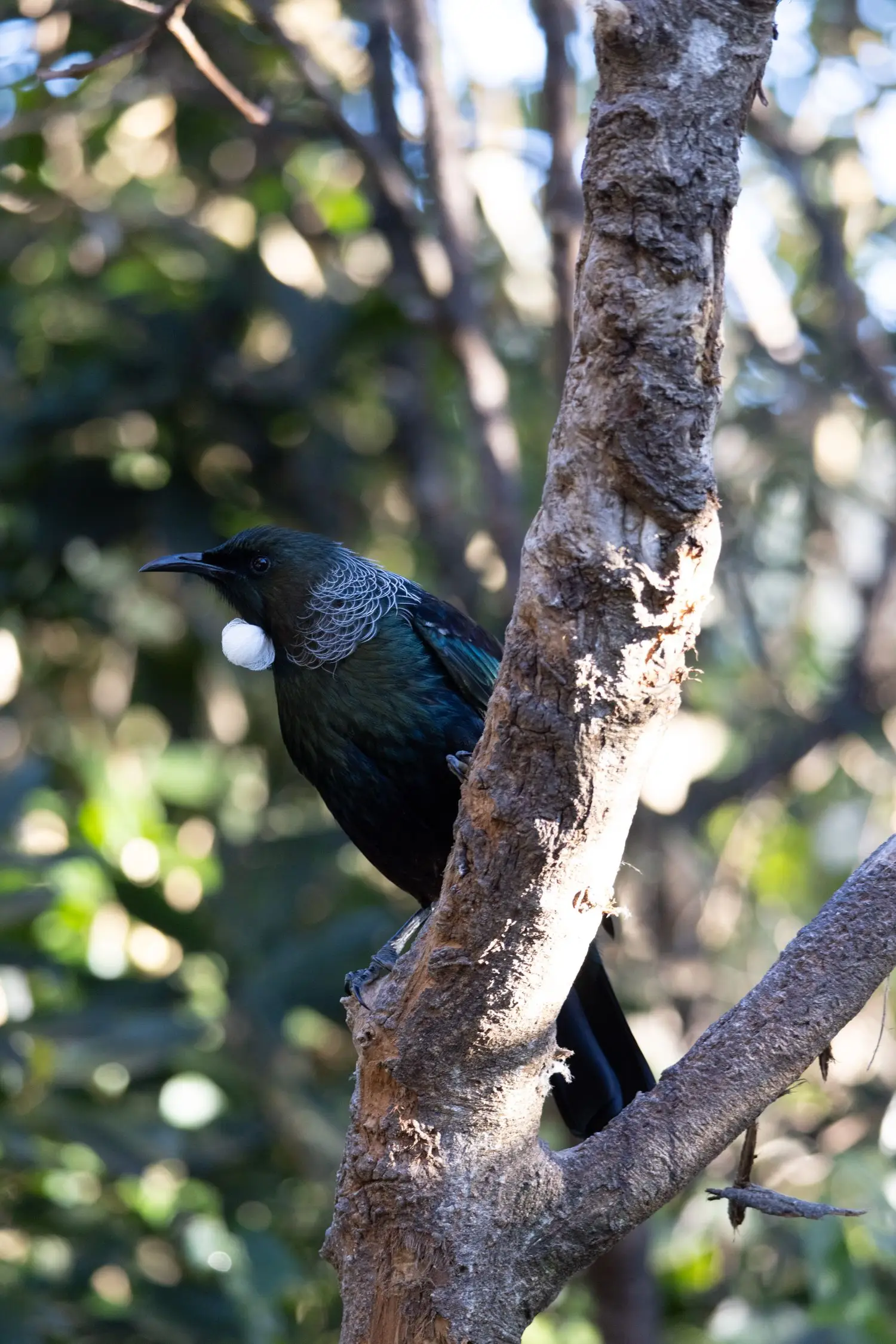
Monthly guided dawn walks through regional parks including the Waitākere Ranges and Hūnua catchments. Focus on separating complex tūī choruses, korimako (bellbird) counter-singing, and subtle pōpokotea (whitehead) flock movement.
Hands-on specimen and photography study sessions. Master bill curvatures, flight silhouettes of forest raptors like the kārearea, and plumage variations across juvenile and breeding adults.
High-tide roost counts across the Firth of Thames and Manukau Harbour. We record flagged kuaka (bar-tailed godwits) and wrybill movements to assist international flyway researchers.
Collaborative conservation weekends supporting pest-free havens. Volunteers track saddleback (tīeke) and hihi nest success rates under Department of Conservation guidelines.
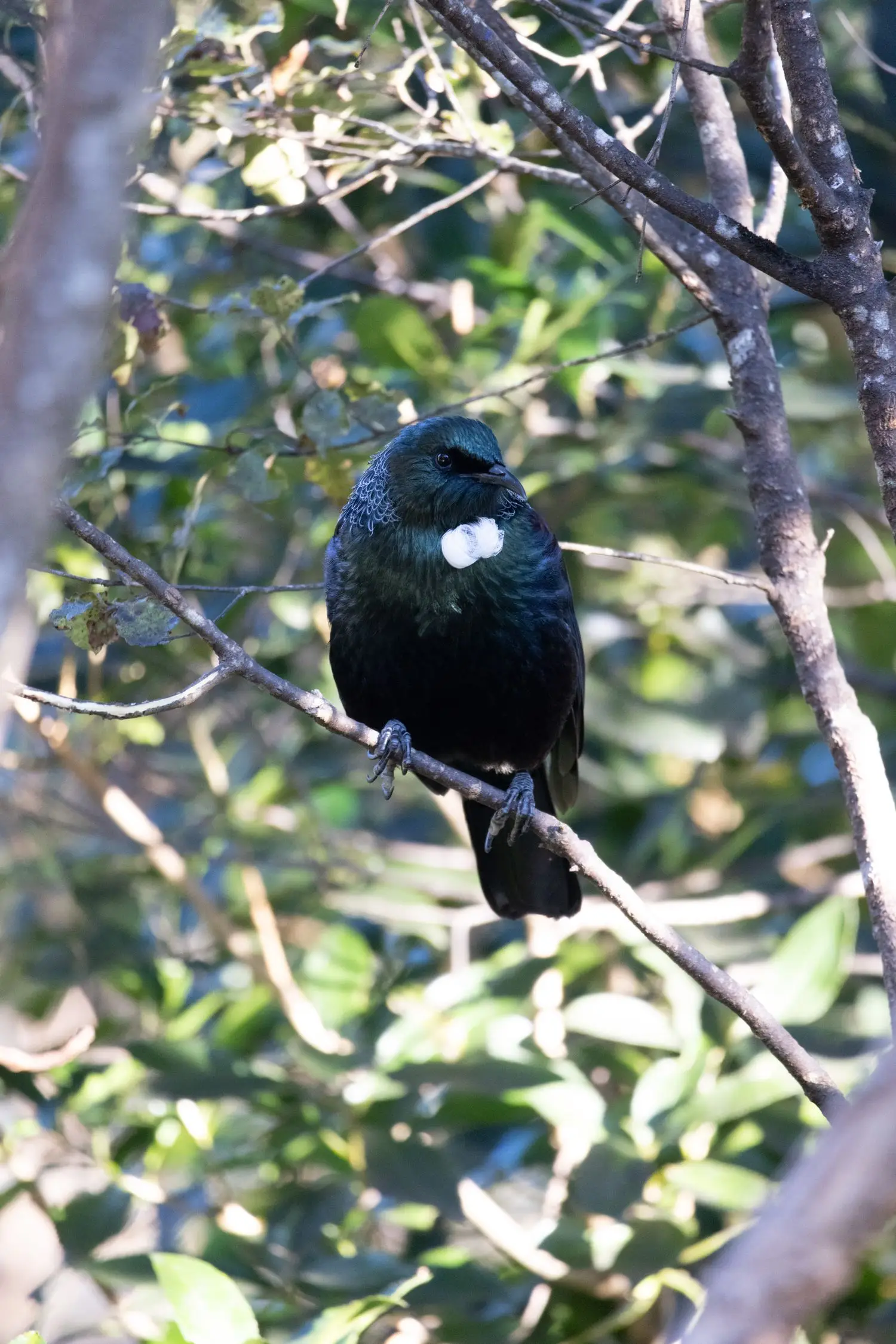
Observed feeding on kōwhai nectar during our spring survey along the Waitākere foothills.
New Zealand’s unique avian wildlife evolved without mammalian predators, leaving many ground-nesting and forest birds exceptionally vulnerable to human stress. Our code of practice guarantees that the welfare of the bird always supersedes personal observation or photographic ambition.
Never use recorded calls to draw territorial birds from their nests. It expends vital energy and alerts aerial predators.
Stay well behind high-tide markers on nesting spits where tūturiwhatu (NZ dotterel) lay well-camouflaged eggs directly on the shingle.
Scrub boot soles and sanitize packs prior to boarding transport to offshore reserves (Tiritiri Matangi, Hauturu, Rotoroa).
Every sighting checklist produced on club excursions is validated by regional verifiers and submitted directly to eBird NZ, the Ornithological Society of New Zealand records scheme, and local council biodiversity teams.
Over 14,000 geolocated observation logs submitted across Northland, Auckland, and Coromandel since our inception.
Join our active membership roster to receive monthly outing briefings, private sanctuary permits, and field guide reprints.
Orqelavessianea is organised around practical learning. Experienced observers share methods with newer members, but every identification remains open to evidence and revision when field marks are incomplete.
Outings are divided into manageable groups so participants can hear calls, compare notes and move without creating a crowd around wildlife. Leaders set a pace suitable for the habitat and visibility.
Unusual records are discussed using field descriptions, photographs when available, habitat, timing and vocal evidence. The purpose is to improve observation quality, not to reward confident guesses.
Members learn the relationships between bird communities, vegetation, coastlines, wetlands and seasonal food sources. Knowing habitat makes identification more accurate and conservation concerns easier to recognise.
Good birdwatching is not measured by proximity. The strongest field practice leaves birds free to feed, rest, call and breed without responding to observers.
Groups stop often, use existing tracks and allow birds to reveal themselves. Sudden movement, crowding and repeated repositioning are avoided when a bird is already alert.
Footwear and equipment are cleaned when moving between sensitive reserves. Local access instructions, temporary closures and rāhui are treated as part of the field plan, not as optional advice.
Every participant may call for more distance or a change of route if wildlife appears disturbed. Ethical observation takes priority over photographs, checklists or completing a planned itinerary.